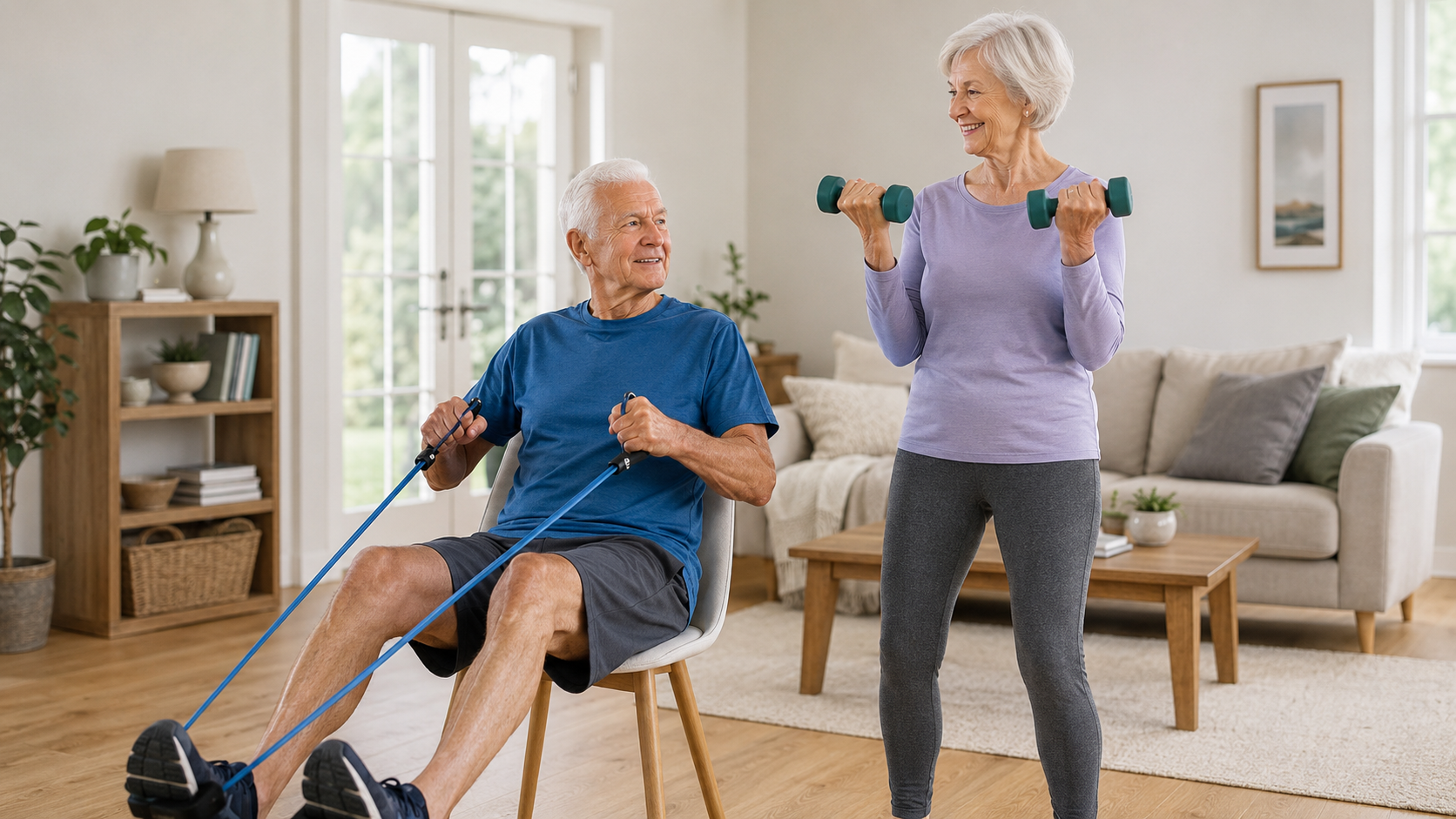
How to Maintain Muscle After 60: A Practical Guide to Staying Strong
Learning how to maintain muscle after 60 can make an important difference in how easily you stand up, climb stairs, carry groceries, walk, recover from a stumble, and remain independent.
Muscle loss is common with aging, but age is not the only cause. Inactivity, illness, injury, poor nutrition, certain medications, and long periods of sitting can all contribute.
You do not need to train like a bodybuilder or spend hours in a gym. Regular strength exercises, walking, balance practice, and sensible recovery can help you protect the abilities you use every day.
Affiliate disclosure: This article contains affiliate links. As an Amazon Associate I earn from qualifying purchases. This does not affect the price you pay. Read our full affiliate disclosure.
This article provides general educational information and is not medical advice. Speak with a qualified healthcare professional before starting a new exercise program, especially if you have heart, lung, balance, joint, or other medical concerns.
Why Muscle Strength Matters After 60
Age-related loss of muscle mass, strength, and physical function is commonly called sarcopenia.
The changes may happen gradually. At first, you might notice that getting out of a low chair requires more effort. Later, carrying groceries, walking uphill, climbing stairs, opening jars, or maintaining balance may become more difficult.
Weakness can also make people less active. Unfortunately, moving less can lead to even more loss of strength and stamina.
Several factors may contribute:
- Muscles can become less responsive to exercise.
- Activity often decreases after retirement, illness, or injury.
- Joint pain may discourage challenging movement.
- Poor appetite can lead to inadequate nutrition.
- Hospital stays and bed rest can cause rapid loss of strength.
- Fear of falling can cause someone to avoid useful activity.
- Certain medical conditions and medications may affect energy or muscle function.
The National Institute on Aging explains that strength training can help counter age-related declines in muscle and physical ability.
Some physical decline may still occur as we age, but becoming very weak should not automatically be dismissed as “just getting older.” Unexplained weakness, repeated falls, or rapid weight loss should be discussed with a healthcare professional.
Strength Training Is the Most Important Step
Walking is valuable, but maintaining muscle usually requires some form of resistance exercise.
Resistance exercise makes your muscles work against a force. That force can come from:
- Your own body weight
- Standing up from a chair
- Resistance bands
- Light dumbbells
- Weight machines
- Water resistance
- Carefully selected household objects
The CDC’s physical-activity guidance for older adults recommends muscle-strengthening activities at least two days each week. The activities should involve the major muscle groups.
This does not mean you must lift extremely heavy weights. The exercise should be challenging enough to make your muscles work, but you should still be able to control the movement and maintain good form.
Start With Movements You Use Every Day
A useful strength program should support real-life activities.
Instead of beginning with complicated exercises, consider movements related to standing, pushing, pulling, lifting, carrying, and maintaining balance.
Chair Sit-to-Stands
Sit near the front of a sturdy chair with your feet placed securely on the floor. Lean forward slightly and stand using controlled movement. Sit down slowly rather than dropping into the chair.
Use your hands for support if necessary. As you become stronger, you may be able to use less help from your arms.
This exercise can support the muscles used for standing from a chair, getting out of a car, and climbing stairs.
Wall Push-Ups
Stand facing a wall and place your hands against it around shoulder height. Bend your elbows and move your upper body toward the wall. Push yourself back to the starting position.
Standing farther from the wall generally makes the movement more challenging. Keep your body controlled and avoid letting your hips sag.
Supported Heel Raises
Stand behind a sturdy chair or at a secure counter. Slowly rise onto your toes, pause briefly, and lower your heels.
This movement works the calf muscles and may support walking and ankle stability. Keep support nearby in case you feel unsteady.
Seated Knee Extensions
Sit upright in a sturdy chair. Slowly straighten one leg, pause briefly, and lower it. Repeat with the other leg.
Avoid swinging the leg or forcing the knee into a painful position.
Gentle Rows
Rows strengthen the upper back and arms. They can be performed using a resistance band with handles or a suitable exercise machine.
Keep your shoulders relaxed and pull your elbows back using a controlled movement. Do not jerk the band or hold your breath.
How Much Should a Beginner Do?
There is no single starting number that works for everyone.
Begin with a number of repetitions you can complete with controlled form. Stop if your movement becomes sloppy or you experience sharp pain, dizziness, or unusual shortness of breath.
At first, one short session may be enough. As your strength and confidence improve, you can gradually add:
- A few more repetitions
- Another set
- Slightly more resistance
- An additional exercise
- A longer session
Increase one part at a time. Jumping from very little activity to a demanding program can leave you overly sore, increase injury risk, and make you less likely to continue.
The goal is not to exhaust yourself. The goal is to provide a regular challenge that your body can adapt to.
Walking Supports Strength but Does Not Replace It
Walking is one of the most practical activities for older adults. It supports cardiovascular fitness, stamina, mobility, mood, and the ability to remain active outside the home.
However, ordinary walking may not provide enough resistance to maintain every major muscle group. It does little to challenge the chest, arms, shoulders, and upper back.
That is why walking and strength training work well together:
- Walking supports stamina and cardiovascular health.
- Strength exercises challenge muscles more directly.
- Balance activities help with stability and body control.
- Mobility work helps you move joints through a comfortable range.
The CDC recommends that adults aged 65 and older aim for at least 150 minutes of moderate-intensity aerobic activity per week when their health and abilities allow. People who cannot meet that amount should remain as active as their abilities and medical conditions permit.
You can divide walking into shorter sessions. Three 10-minute walks may feel more manageable than one continuous 30-minute walk.
Progress by adding a few minutes before forcing a much faster pace.
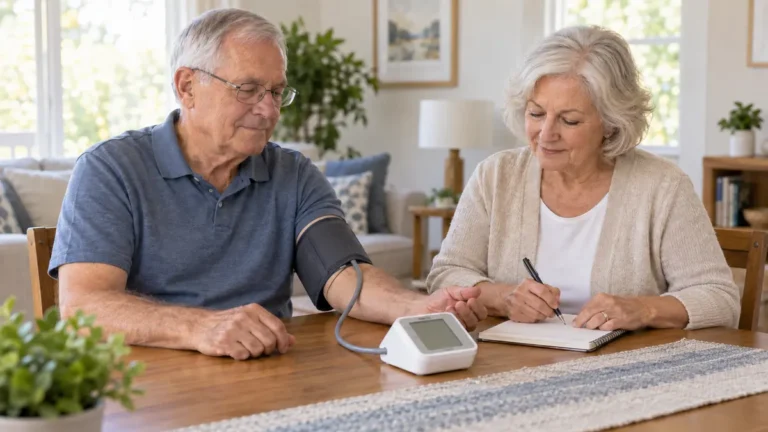
For help monitoring your walking effort, read our heart-rate monitor guide for walking.
Do Not Forget Balance
Strength and balance are closely connected, but they are not exactly the same.
Someone can have reasonably strong legs and still struggle with balance because of vision changes, inner-ear problems, medications, nerve problems, or other conditions.
Simple balance practice might include:
- Standing with the feet closer together
- Shifting weight carefully from one side to the other
- Marching slowly while holding a counter
- Practicing heel-to-toe positioning with support nearby
- Standing briefly on one foot while holding a sturdy surface
Balance exercises should be performed near a wall, counter, sturdy chair, or another person who can provide support.
The National Institute on Aging recommends moving slowly and having support available during balance activities.
If you have already fallen, frequently feel unsteady, or suddenly develop balance problems, speak with a healthcare professional or physical therapist before practicing alone.
Equipment Is Optional at First
You can begin strength training with a sturdy chair, a wall, and your own body weight.
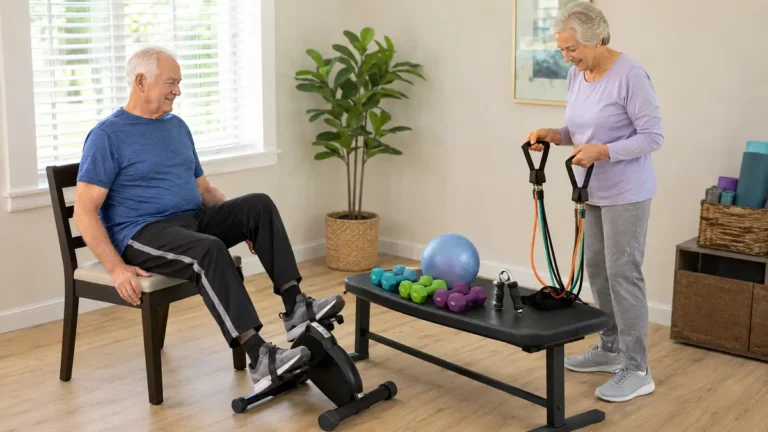
Resistance bands and light dumbbells can provide more exercise choices later, but buying equipment does not create results by itself. The best equipment is something you can use safely and consistently.
Our guide to strength-training equipment for older adults compares resistance bands, dumbbells, pedal exercisers, and other home exercise products. This article stays focused on building the habit rather than buying more equipment than you need.
Nutrition and Recovery Still Matter
Exercise provides the challenge, but muscles also need adequate food and recovery.
Try not to perform demanding strength exercises for the same muscles every day. Allow time to recover, especially when you are beginning.
Helpful habits include:
- Eating enough total food to avoid unintended weight loss
- Including protein-rich foods with meals
- Drinking enough fluids unless medically restricted
- Maintaining a regular sleep routine
- Increasing exercise gradually
- Paying attention to persistent pain or unusual fatigue
Protein is important, but individual needs differ. Kidney disease and other health conditions can affect how much protein is appropriate. Our Protein After 60 guide covers food sources, whey protein, recommended ranges, and medical cautions.
Creatine deserves its own evidence-based discussion. It should not be presented as a shortcut, and some people should speak with a clinician first. Our guide to creatine for older adults covers the evidence and its limitations.
Making Exercise Easier to Continue
The best program is not the most impressive one. It is the one you can continue.
A few ideas may help:
- Choose regular days. Two planned strength days are easier to remember than exercising “whenever there is time.”
- Keep sessions manageable. A short workout completed regularly is more useful than an exhausting session followed by two weeks of inactivity.
- Track something simple. Record the exercises, resistance, or number of controlled repetitions.
- Exercise near support. Keep a sturdy chair or counter nearby when balance is uncertain.
- Reduce distractions. Clear loose rugs, pets, cords, and clutter from the exercise area.
- Wear secure footwear. Avoid loose slippers or socks on slippery floors. Non-slip walking shoes are a good choice.
- Notice daily improvements. Standing more easily or carrying groceries with greater confidence matters more than chasing impressive numbers.
A fitness tracker may help record walking and general activity, but it cannot measure every improvement in strength. Our guide to the best fitness trackers for adults over 50 explains what these devices can and cannot do.
Common Mistakes
- Walking regularly but never challenging the muscles
- Starting with resistance that is too heavy
- Using momentum instead of controlled movement
- Holding your breath during an exercise
- Exercising through sharp joint pain
- Increasing the workload too quickly
- Buying equipment that is difficult to use
- Comparing yourself with someone younger or more experienced
- Ignoring repeated falls or unexplained weakness
- Expecting supplements to replace exercise
Consistency is more valuable than occasional exhausting workouts.
When to Stop and Seek Help
Stop exercising and seek medical attention for warning signs such as:
- Chest pain or pressure
- Fainting or feeling close to fainting
- Severe or unusual shortness of breath
- Sudden weakness or numbness
- A rapid or irregular heartbeat accompanied by symptoms
- New severe pain
- A fall that causes injury
Joint or muscle discomfort that persists or worsens should also be evaluated rather than repeatedly pushed through.
Some people also ask about red light therapy for sore joints and recovery. The research is still limited, so read our guide to red light therapy for older adults before buying a device.
Bottom Line
The most practical way to maintain muscle after 60 is to challenge your muscles regularly while continuing to walk, practice balance, eat adequately, and allow time for recovery.
Start with simple movements such as chair sit-to-stands, wall push-ups, supported heel raises, and seated knee extensions. Exercise at a level that fits your present ability, and increase the challenge gradually.
You do not need to regain the strength you had decades ago to benefit. Improving your ability to stand, walk, carry, balance, and remain active is a worthwhile goal at any age.
For help planning meals, read our Protein After 60 guide. If you are considering a supplement, our guide to creatine for older adults explains the evidence, limitations, and safety considerations.
When you are ready to compare home exercise gear, explore our guide to strength-training equipment for older adults, including resistance bands and light weights.
This article provides general educational information and is not medical advice. Exercise recommendations should be adjusted for individual abilities, health conditions, and guidance from qualified healthcare professionals.
Related Reading
- Can You Build Muscle at 90? What the Research Says
- Best Fitness Trackers for Active Adults Over 50
- Heart Rate Monitors for Walking and Cardiac Fitness
- Best Smartwatches for Older Adults
- Browse Active Aging Wearables Products
Want a shortcut? Take our 3-question Red Light Therapy Quiz and get matched to the right device for your needs and budget.




6 Comments
Comments are closed.